
Synthetic grass for Orlando & Central Florida
Artificial Turf in Orlando, FL
Lawns, dog runs, putting greens and play areas built on a base that drains a summer downpour and planned with the Florida heat in mind.
- Free on-site estimates
- Written, itemized quotes
- Drainage and base planned for Florida rain
Turf Built for Rain, Sand and Sun
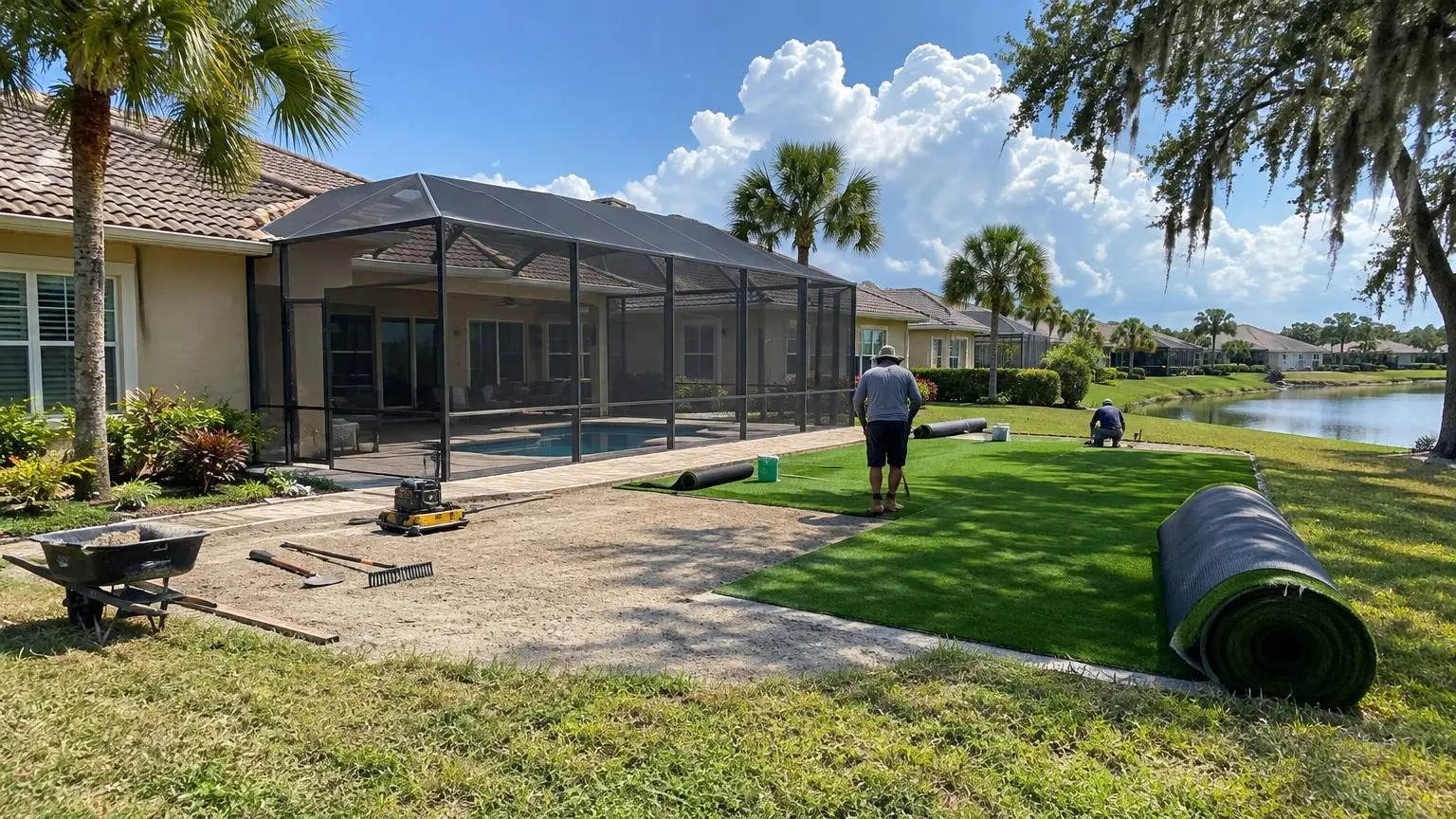
Artificial turf in Orlando solves real problems: St. Augustine grass that browns out under watering limits, bare patches under oaks, muddy dog runs, and weekends spent mowing. It also brings Orlando-specific problems that a good installer plans for: heavy summer rain, loose sandy soil, and a surface that gets very hot in full sun. We install synthetic grass for homes and businesses across Orlando and Central Florida, starting with the ground under it.
Is artificial turf good in Florida?
It can be, if it is installed for Florida conditions. Orlando has a humid subtropical climate with about 51 inches of rain a year, and roughly 57% of it falls from June through September, often as heavy afternoon thunderstorms. Turf itself does not mind rain. What fails is the base: if water cannot drain through, it pools on top, softens the ground and leaves low spots and wrinkles. The other issue is heat. A UNLV study measured green synthetic turf at up to 69°F hotter than irrigated natural grass, with surface readings as high as 169°F, and UF/IFAS research reported synthetic turf reaching 174°F on the hottest days while live grass stayed near 102°F. Turf works well in Florida for low-traffic lawns, shaded areas, dog runs and putting greens. For a play area in full afternoon sun, shade, product choice and a garden hose matter.
How we prepare the ground
Preparation decides how long a turf lawn looks good. Our standard steps:
- Remove existing grass, roots and weeds, and haul the debris away
- Cap or remove sprinkler heads in the turf area
- Grade the soil so water moves away from the house and toward a place it can soak in or drain
- Lay a weed barrier where it fits the site
- Spread and compact a porous crushed-stone base, usually around 3 to 4 inches deep
- Roll out the turf, glue and secure the seams, and fasten every edge
- Brush in infill and power-brush the blades upright
Orlando's sandy soil
Much of the Orlando area sits on deep sand. The USDA's description of the Orlando soil series is sand or fine sand to 80 inches or more, well drained with rapid permeability, and UF/IFAS describes Central Florida soils as very sandy. Sand drains well, which helps turf, but it shifts and settles if it is not compacted, and nearby soil series such as Seffner have water tables 18 to 48 inches down, so a low lot can stay wet after storms. We check how your yard actually drains during the estimate and adjust the grade and base depth to match.
Water restrictions and turf
Most of Orange County follows St. Johns River Water Management District watering rules. In normal conditions, residential lawns may be watered on up to two set days a week during daylight saving time and one day a week during standard time, and not between 10 a.m. and 4 p.m. Synthetic turf does not need irrigation to stay green, which is a big reason Orlando homeowners switch. You will still want to rinse pet areas and cool the surface with a hose on hot days. Check the district's current rules, since water shortage orders can tighten the schedule.
The rules on synthetic turf in Florida
Florida law changed in 2025. House Bill 683, signed in June 2025, added Section 125.572(3) to the Florida Statutes: once the Florida Department of Environmental Protection adopted minimum installation standards (Rule 62-308.100), cities and counties may not prohibit compliant synthetic turf on single-family lots of one acre or less. DEP's rulemaking materials list requirements such as lead-free turf, no rubber infill, a porous base at least 3 inches thick, drainage that prevents pooling, and capping irrigation in turf areas. Those rules do not override HOA covenants. Florida's Section 720.3045, added in 2023, limits how HOAs can restrict items that are not visible from the street or a neighboring lot, which often covers backyards. Front yards still usually need HOA approval, and we can provide product specs and a layout for your application. One more wrinkle: the 2025 statute says its limits do not apply to a community development district's rules that enforce deed restrictions.
Mosquitoes and standing water
Orange County's mosquito control program tells residents to tip out standing water because it is where mosquitoes breed. A properly built turf area drains through the backing and base instead of holding puddles. A poorly built one, with a flat or dished grade over compacted fill, can do the opposite. Grading is part of every job for this reason.
What artificial turf costs
Angi's 2026 data puts a typical installation at about $3,244 to $8,711, with an average near $5,780, and a total of about $6 to $22 per square foot including materials and labor. Fixr's guide lists 1,000 square feet at roughly $5,000 to $12,500, and HomeGuide puts installed turf at $10 to $25 per square foot. Removing existing grass, extra drainage, many curves and tight access all raise the number. Your written estimate sets the price.
Our Artificial Turf Services
Six services cover most turf projects in Central Florida, from a full front lawn to a small putting green or a worn-out turf repair.
Artificial Turf Installation
Full synthetic lawns for front and back yards, built on a graded, compacted base that drains Florida storms.
Learn more →Pet Turf
Dog runs and pet yards with fully draining backing, odor-control infill and a base that rinses clean.
Learn more →Putting Greens
Backyard synthetic putting greens with contoured base, cups and fringe, built to roll true after summer rain.
Learn more →Playground Turf
Turf for backyard play areas and swing sets, with foam padding options and planning for shade and heat.
Learn more →Commercial Turf
Synthetic turf for businesses, HOA common areas, rentals and hospitality spaces, with drainage planned for site rules.
Learn more →Turf Repair & Replacement
Fixes for split seams, lifted edges, low spots, pooling water and pet odor, or full replacement of worn turf.
Learn more →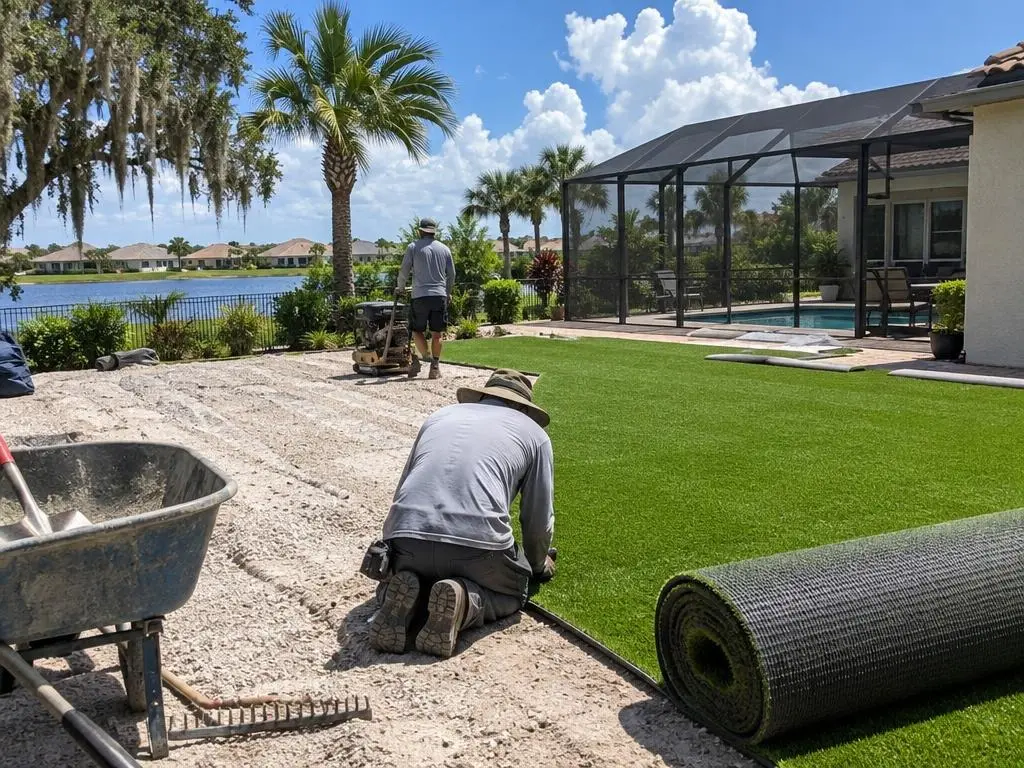
Why Homeowners Call Artificial Turf Pros Orlando
Base built for Florida rain
Old sod removed, soil graded away from the house and a compacted porous base laid so storms drain through.
Straight talk about heat
We explain how hot turf gets in full sun and help you choose placement, products and infill with that in mind.
HOA-ready paperwork
Product specs, color and a site sketch for your association application when you need them.
One written, itemized price
Removal, base, turf, infill, edging and extras listed separately. Nothing is added without your written approval.
Common Questions
How much is 1,000 square feet of artificial grass?
Fixr lists 1,000 square feet at about $5,000 to $12,500 installed, and HomeGuide's range for the same area is $10,000 to $25,000. The spread comes from the turf product, how much old grass and soil must be removed, drainage work and the shape of the area. We give a written price after measuring.
Is artificial turf good in Florida?
It works well when the base drains properly and the area suits it. Orlando gets about 51 inches of rain a year, mostly in summer storms, so a porous, compacted base is essential. Turf also gets much hotter than live grass in full sun, so shade and product choice matter for play areas and pets.
How do you prepare ground for artificial turf?
We remove the existing grass and roots, cap sprinkler heads in the area, grade the soil so water flows away from the house, add a weed barrier where it fits, then spread and compact a crushed-stone base, usually around 3 to 4 inches deep. Turf is laid on that base, seamed, fastened at the edges and filled with infill.
What is the best artificial grass for hot climates?
There is no single answer, but look for UV-stabilized blades, lighter or multi-tone colors, a fully permeable backing and a non-rubber infill. Some products and infills are sold as cooler, but in direct Florida sun all synthetic turf gets hot. Shade and a quick hose rinse lower the surface temperature more than any product claim.
Can my HOA stop me from installing artificial turf?
Florida's 2025 law limits cities and counties, not HOAs. Your HOA documents still apply, though Section 720.3045 bars HOAs from restricting items, artificial turf included, that cannot be seen from the frontage, an adjacent parcel, common areas or a community golf course, which often includes fenced backyards. For front yards, plan on an architectural review; we can supply product specs and a layout.
Do I need a permit for artificial turf in Orlando?
Under Section 125.572(3), local governments cannot prohibit synthetic turf on single-family lots of one acre or less that meets the state's minimum standards. DEP does not issue permits for turf; its FAQ says permitting is left to local governments, so the city or county may still have a process. Commercial properties, condos, duplexes and larger lots are outside the state rule, so we check local requirements before any job.
Does artificial turf cause standing water or mosquitoes?
Not when it is installed correctly. Turf backing is perforated or fully permeable, and the crushed-stone base lets water pass into the sandy soil below. Standing water on turf usually means a poor grade or a compacted, non-porous base, which is why grading is part of every job we do.
Where We Work
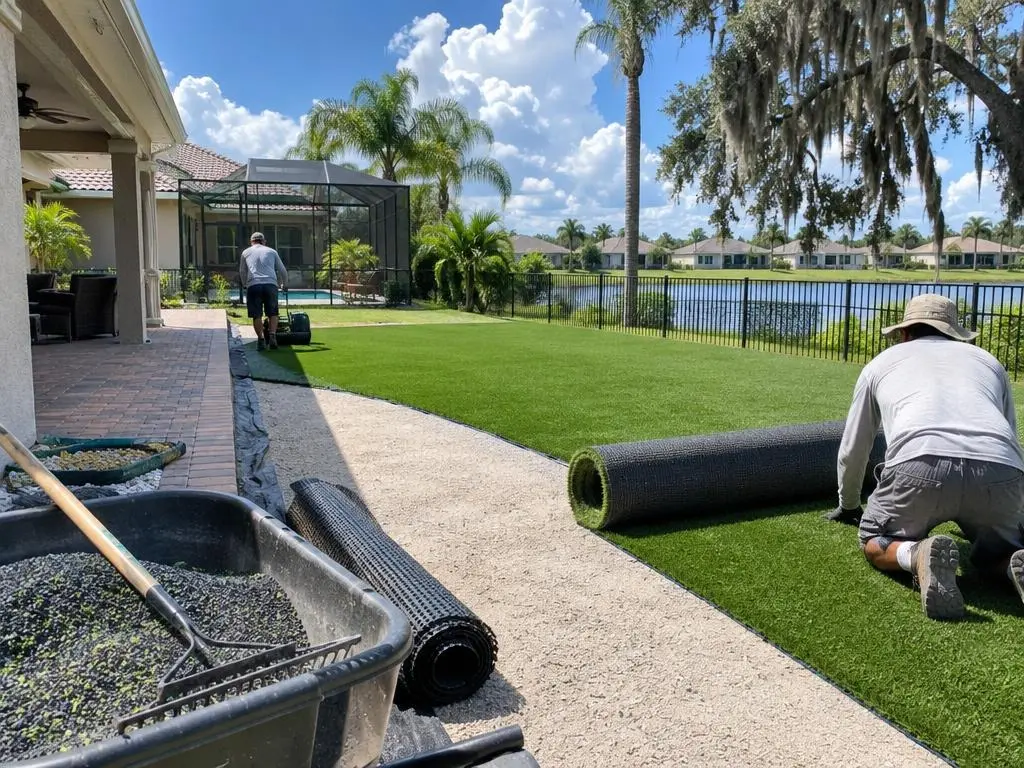
Orlando is home base, and we work across Central Florida: Winter Park, Maitland, Altamonte Springs, Longwood, Lake Mary and Sanford to the north; Winter Garden, Windermere, Ocoee, Doctor Phillips and Clermont to the west; Kissimmee, Celebration and St. Cloud to the south; Oviedo and Winter Springs to the northeast; and Apopka to the northwest. These towns share the same summer rain pattern and sandy soil, but the details change from street to street: lakefront and low-lying lots can hold water after storms, older neighborhoods have big oaks with shade and roots to plan around, and newer subdivisions usually come with HOA review for any front-yard change. Watering rules come from the water management district: the Central Florida Tourism Oversight District area of Orange County follows South Florida rules rather than St. Johns, the St. Johns district's map shows Osceola County under South Florida rules, and parts of Lake County have been under a St. Johns water shortage order. Each area page covers what applies there.
- Artificial Turf in Orlando, FL
- Artificial Turf in Winter Park, FL
- Artificial Turf in Winter Garden, FL
- Artificial Turf in Windermere, FL
- Artificial Turf in Ocoee, FL
- Artificial Turf in Apopka, FL
- Artificial Turf in Kissimmee, FL
- Artificial Turf in St. Cloud, FL
- Artificial Turf in Doctor Phillips, FL
- Artificial Turf in Oviedo, FL
- Artificial Turf in Winter Springs, FL
- Artificial Turf in Lake Mary, FL
- Artificial Turf in Sanford, FL
- Artificial Turf in Altamonte Springs, FL
- Artificial Turf in Longwood, FL
- Artificial Turf in Clermont, FL
- Artificial Turf in Celebration, FL
- Artificial Turf in Maitland, FL
Get an Artificial Turf Estimate
Free on-site estimates in Orlando and across Central Florida.